Chris Chivers (Thinks)

  • Home
  • Blog-Thinking Aloud
  • Contact
  • Contents
  • PDFs
  • Sing and strum

Learning To Fly Solo

30/12/2016

0 Comments

 
Picture
There’s a small residual box of my “historical bits” in the loft, which I have reserved simply as keepsakes. There’s a glass plate negative of my paternal grandfather standing beside a biplane on which he worked before 1918. My father never knew his father, as he was born in 1919, while my grandfather died in the Spanish flu of 18/19. Flying solo was a metaphor for my father’s life, as well as my own, as a result of parental divorce.

Flying solo can also be a metaphor for development as a teacher. From the initial stages of learning the fundamentals of the craft, making errors and occasionally crash landings, gradually, controlling the whole class becomes easier, enabling the key messages to be developed effectively. I spend a great deal of my working year with ITE trainees in schools. At every step they are seeking to prove that they are not just developing as future teachers, with potential, but that they are offering opportunity at a good level.

Eventually, the trainee achieves sufficient status and then flies solo. They have to make appropriate preparations and checks before embarking on the journey, to have a log book that records what they intend. They need to learn to read the signals “in-flight” and take notice of potential hazards, without reference to their textbooks, or thinking “What would “expert name” do?”, making appropriate adjustments within the flight. Post-flight, they will evaluate the outcomes, learning for the next opportunity.

January sees many of the School Direct trainees embarking on their second school experience, moving from their substantive practice, where they have become familiar with routines and expectations, to a completely new environment where, within the six week half term, they have to again show they are good, as defined by the teacher standards.

In the best situations a trainee will have a well-informed, very involved mentor, prepared to provide coaching to the trainee, within and between the lesson.

A visit to the Discovery Centre (library) in Gosport yesterday brought me into contact with a small display. What drew my attention was a photograph of a biplane and engineer which was almost exactly like that with my grandfather.

The accompanying text detailed a development made in the Gosport engineering works around 1918, where a rubber tube with effectively a funnel at each end was used to link the trainee pilot with their instructor behind. This simple device avoided more accidents as the instructor could make the trainee alter their behaviour and engage in actions that would be more effective, or resolve issues before they became more difficult or dangerous.

This is a relatively simple act that can prompt behaviours in the developing trainee, altering their behaviour in the classroom context. There are systems now that effectively emulate the rubber tube and funnels, with digital in-ear coaching, while lesson study activities can further develop awareness.

Developing the next generation of teachers is the responsibility of the whole profession. Where schools, as a whole, share responsibility for development, the trainee benefits from the collective knowledge. Where trainees and NQTs are left to their own devices, it is not surprising if they begin to flounder and crash land. Opportunity to talk, to discuss successes and areas for development must be available. Too often, the mentoring role is given to an already busy teacher. This can lead to the mentor only operating in a judgemental role, diminishing the development of the trainee to simplified target setting and achievement. Helping the trainee to understand how to improve is as important as telling them what to improve.

This echoes every learning situation.

If you are a mento to a trainee nect term, the following might be a useful aide memoire to support your and their organisation and lead to early successes.

Considering Post Graduate and School Direct Short Placements.
​  

Being such a short experience, the six/seven weeks will fly past very quickly, so, in order to maximise the potential for a successful practice I offer the following organisational insights from previous experiences.

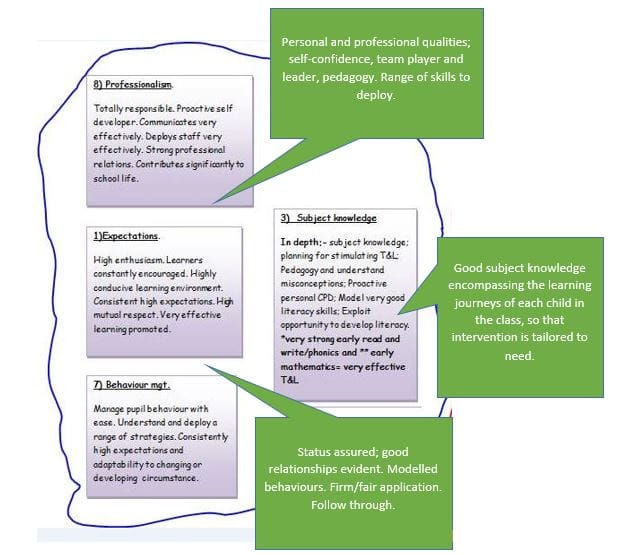
The first thing is to secure the professional standards as per this diagram.
Picture
This means being professional from your first contact with the new school to give the school confidence that you are an appropriate person to be trusted with their children. Find out about key policies, including safeguarding and behaviour management. From the beginning, get to know the children from talking to them, generally and about the work in their books; establish appropriate expectations. This will be added to with discussion of tracking documents and knowing where the teacher would like the children to be by the end of the period. Find out the themes and topics being covered and those specific areas where you will take a lead role. ​

Two key messages; know the children and know your stuff…

Create an overall plan for the six or seven weeks. Put into the plan any specific areas that you need to observe, within this key stage, whether structural like planning or behaviour management, discussions with particular staff, to address any gaps in, or to broaden your understanding of different areas. Plan in any assignments that have to be completed within this timescale, particularly if they depend on interactions with children or staff. Use your professional time well and remember that your colleagues fit you in around other roles.
​
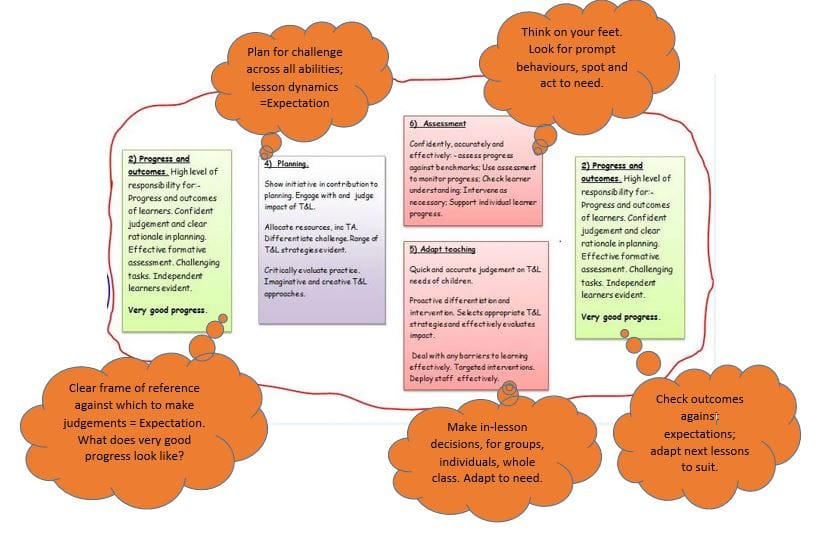
The practical teacher standards will need to be developed within the experience. 
​
Picture
2; Progress and Outcomes or knowing the children, in class terms. The range of abilities, how they are organised for learning and tasking. Finding out about the school approach to assessment and feedback.

4; Planning. This will have school specific elements. Hopefully, you will be able to get the plan for the half term, from which weekly plans will be developed, again that you should have, so that daily and single lesson plans can fit into a weekly dynamic, allowing reflection, during the week, of the need to adapt and also to evaluate the progress made during the week.

6&5; while some assessment will be after each lesson, with the next lesson altered if there is a need, there is also a need to consider assessment within the lesson. Whereas you may think that you have created the challenge within tasks appropriately, children will demonstrate, through a variety of means, that they do not understand something, or that they are finding the challenge too easy. It is important that you spot and deal with issues that arise with fluency, so that children’s learning is not disjointed.

2; the loop is closed with evaluation of outcomes and greater understanding of the children, as a group, but also as individuals. The repetitive cycle enables a refining of understanding and of approaches.
​
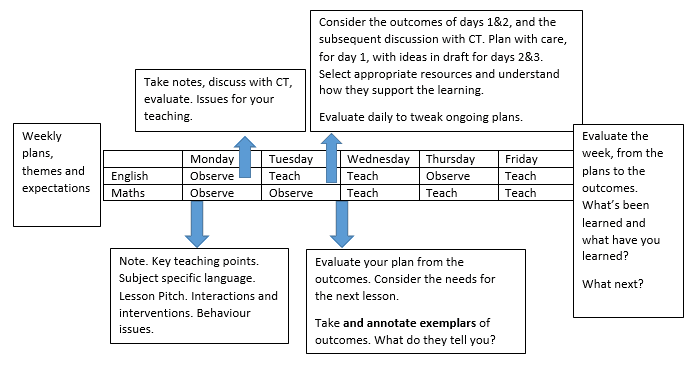
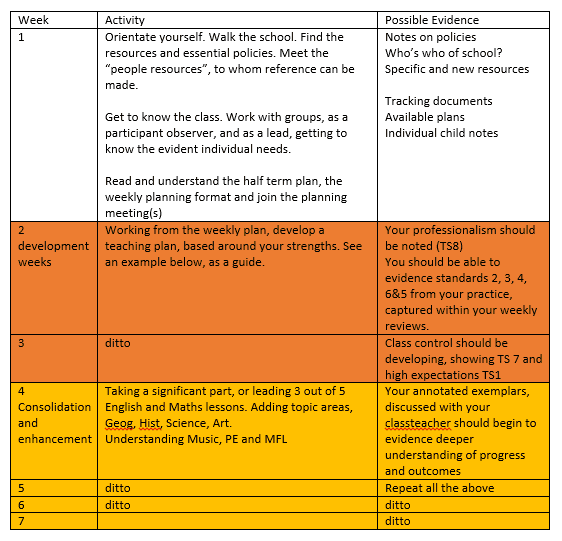
Seeking to put this together into a coherent plan that allows for all these elements might be achieved with the following model.
​
Picture
Picture
0 Comments

Past, present and Possible Futures 

28/12/2016

0 Comments

 
#teacher5aday #nurture1617
It is very strange how, at this point in the year it is possible to become reflective and sometimes a little melancholic, as, at midnight on 31st December, the year change seems to herald something new, when, in reality, every day that we wake up is the novelty, the start of a new series of experiences, some planned, many unexpected. For that reason, I now don't make "resolutions". I'd rather seek to make plans, rather than have good intentions.

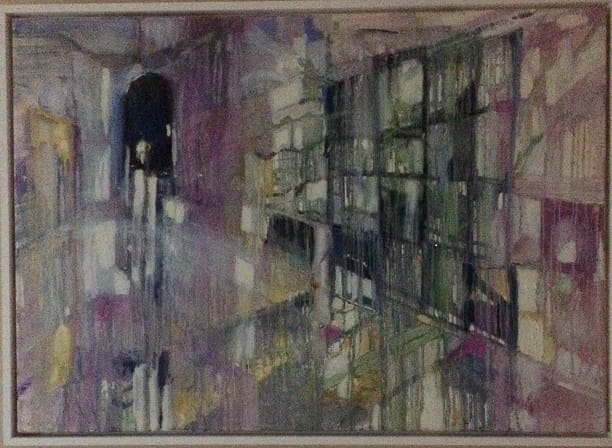
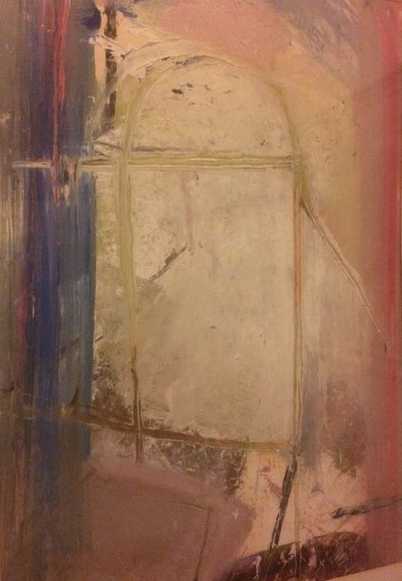
Meeting up with certain people can recall earlier periods of your life. This week, we have met with friends who started teaching with me in September 1974 and we have remained friends ever since, sharing personal highlights and woes. Another friend started in the capacity of lecturer when I was attending a Post Grad diploma course. Having lost contact, this was resumed when we walked the Emsworth Art Trail some ten years ago. Recently, I decided that I wanted to buy a piece of her art work and we spent a long while exploring the entirety of her work. One series was developed on the theme of journeying, with doors and mirrors playing a part.

This picture I found irresistible, and it now hangs in our lounge. It is one that repays several viewings as it can be looked at in many ways.
​
Picture

If life is seen as a journey, we often encounter new elements. These can equate to doors, through which we can choose to pass or not; these may be job opportunities, a chance of a life-long love affair, the start of a new interest. When they have passed and we haven’t entered, we often look at the route to the decision and how we made it, as if we are holding a mirror to ourselves, to check out whether or not we made the decision wisely.


Sometimes the past is a place that we lock away, for safe keeping, or so that the Pandora’s Box of stored feelings doesn’t break through and distort where you are now. If it’s safe, it can be got out now and again, just to remind ourselves of what we were and what we’ve become. Our memories act to some extent like photo albums, snapshots of time, but, not being a video with sound, we inevitably add a distortion, as if our memory is a hall of mirrors. No doubt there is also some judicious pruning of the less positive or even hurtful elements, to accentuate what’s left to sound more-so, or just to remember happy times.

Family members who pass through the same events can often appear to remember them with polar opposite standpoints. At any point in time, although we might exist in the same space, we each attend to the event with our own personal point of view, honed over time, through our personal experiences and the reflections that arise from them. Our vision, or hearing might, for some reason be the impairment that precludes us from essential information.

It can be that our memories are coloured by dashed hopes; a case of if only, a pity that, I wish I had… none of which is ultimately helpful. For children growing up, as I did, in a (mildly) dysfunctional family, the decisions being made around you will have an impact, to some extent until you can make decisions for yourself. Having successfully locked away my teenage years, while a messy parental divorce was happening, I made the decision at 19 to go to Teacher Training College; it offered necessary security and a positive future. Meeting and marrying my first wife in my last year, working as a team, we created a new future, which lasted for 32 years, until she died. Our 20th wedding anniversary gift from the surgeon had been a diagnosis of cancer!

You have to be able to live the moment and make the most of what is before you at that point. This was the impact where the need to look after a mid-teenage son made my decision to step down as a headteacher, after 16 years. This step, in itself, also opened other doors; a number of part-time, flexible work opportunities, some of which developed over time to take more centre stage as my son grew up and went to university. It also allowed me to meet M, who provided the human centre and focused my thinking more firmly on the present and, given the available time, to develop a strong bond that also created a future.

This year will be one of reflection. I have worked beyond retirement age for teachers, in large measure because I am regularly offered interesting projects, from a range of people who value my expertise and the outcomes of my interactions.

I have got better at saying no though, which I recognise as a significant luxury. While a couple of projects are planned to extend into 2017/18, I do also want to make more time for occasional travel and to be able to spend a little more time in my cottage in central France, as long as Brexit doesn’t create too great a rupture and possibly cause some animosity among my kind neighbours. Perhaps, what I am seeking is a little more “me” time; the litany of “lost hobbies” is significant.

I know, first hand and from long experience, that “me” time can be a luxury while working full time, although it can be accomplished with allocated time slots and making best use of holidays. This was initially through camping breaks, then with the French house, where DIY provided the focus for thinking and planning in between visits.

I do want to stay around though, to provide a long view of what’s happening in education. We have entered the strangest period of “development” that I have ever experienced, even if the word “change” has been a feature throughout. It often seems as if the system is becoming ever fractured, with no-one seemingly able to hold the ends together, so it can feel like wilful destruction, in order to create a system in a particular image. The polarisation of argument is less than helpful.
​

With grandchildren in the system and some to start, I still have significant personal interest. After all, it will be their world at some stage. They will ultimately be paying for a vast army of retirees. They might benefit from my longer working life, hopefully in staving off dementia and other ailments.
​
Picture

Happy New Year; pass through your doors gently and be happy. Live each day well and be grateful for waking up!

​
​For information, the artist is Bobby Bale. A broader collection of her images can be seen at her website.
0 Comments

CPD; Shared enterprise and Expertise?

12/12/2016

0 Comments

 
Picture
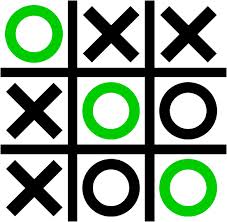
It’s as “easy” as TIC, TAC, TOE; team inside the community, team around the community and team of experts. It's also a useful mantra for graduated SEN practice.

If you are old enough to remember the days before Local Management of Schools, LMS, you will probably recall the limited funds available for schools to buy “essentials”, such as all the consumables. If you were lucky, the authority, in the form of an adviser, might look kindly upon a project and offer a small pump-priming fund, usually supplemented by the PTA fund raising.

These were the days of twilight training sessions, often a series of five or six, at the local teacher’s centre, led by local teachers whose expertise was identified as worth sharing. If you were lucky, you got to do a “Gurney Dixon”; a weekend at the County residential centre. It was not as swish as it might sound. On a few occasions, I had to share my room with the caretaker’s stores, but it was taken as the norm; it was cheap training. The sessions cost the school nothing, but did demand a significant commitment to personal development. However, it did ensure that expertise was shared as widely as possible through the authority.

In-house expertise was equally generously shared, so that the “specialist” would be happy to spend time sharing ideas to help less experienced colleagues. I can remember leaving with ideas that I then went back to my classroom and played, or sat in the library and went through the available books. It was a time of self-help and self-reliance; make do and mend was the mantra. Pencil pots and other stationery containers, made from well-washed tins, covered in wallpaper, or if you were lucky, in sticky back plastic. Paper holders were adapted and covered soap powder boxes. Show boxes of the right size housed the cassette tapes.

LMS enabled internal decision making on school priorities, enabling often significant spending on quality equipment and staffing, especially if the school enjoyed a rising roll. “What would you like?” could replace “What do we need?”
Belt-tightening has been on school agendas for a while and may yet have time before the most difficult decisions have to be taken. Staff reduction decisions are always the most difficult for any school.

CPD could become a casualty, unless there are some changes in approach. To send a member of staff off site, to a central site for a conference could cost several hundred pounds, with supply cover, travel, the cost of the conference and perhaps food. It doesn’t take long for even a generous budget to be spent.

It has often been stated that there is as much discrepancy in practice within a school as there is between schools. What would be the case if every teacher in the community was as good as the best and how could that be achieved?
What do you do, though, to address the constant feeling of busyness?

TIC; Team inside the community. Are you a talking establishment? It’s well worth while looking at the mechanisms within the school that enable an appropriate level of discussion and information sharing that starts with induction practices and then continues. Has the school audited the skills of each member of staff to see where well-needed expertise lies? How are staff meetings and closure days used to support the dissemination of expertise? Is coaching time made available? Is expertise made available in written form? Is there a staff bookshelf, and is it actually used?

Short term additional “staffing” can become a reality within partnership arrangements with ITE providers, especially if final practice trainees are hosted. After a settling period, and a judgement of secure practice, the mentor can plan some time out of the classroom. Releasing staff in-house is a great deal less costly than sending them on a course.

TAC; team around the community. Do you talk outside you school; at all levels? It is really important for a school to recognise the limits of the internal expertise, and, when shared, this will become a reality. It is also essential not to feel alone in the enterprise of developing the school. Schools will develop to the level of the best, but, if the best is not as good as the best elsewhere, how can that expertise be accessed?

If the school works within a cluster, or a local academy group or federation, the expertise in one establishment could be deployed or purchased into a receiving school, to mutual benefit. This could be in the form of twilight sessions, as per the earlier model, or it could be purchased release to model and discuss aspects of practice. This is good CPD for the person delivering also, as they move into a training role.

In attending a number of Saturday conferences, Pedagoo, TLT16 and #LearningFirst (Bath) it has struck me that teachers want to get better at their job. This might prove an appropriate model for some. The #teacher5aday group has organised, and is organising another weekend CPD “retreat”.

There are many models that can begin to address development based on local expertise.

TOE; team of experts. How do you decide when you need a little extra? In some geographic areas, the availability of expertise may soon appear to be evaporated. At this point, or to make a significant impact on an aspect of school development, it may be opportune to buy in someone with acknowledged wider expertise. This could be from a local university, a local inspector, or one of the growing army of consultants. It is a case of “pay your money and take your chance”. The brief needs to be clear and concise and the expert has to have the skills to deliver. There won’t be many readers who have not sat through a training session that has not quite hit the mark.

Local clusters of schools, banding together, can create significantly greater budget for a one-off event, which may be much more cost effective.

When it comes down to it, though, there is a significant simplicity. CPD is communicating the knowledge from someone with acknowledged expertise to others with a need to develop. Making some quality time to talk is therefore paramount. This can start from sitting in a classroom with a cup of tea after school going through an idea with colleagues. It does need goodwill and teacher involvement and ownership of their own need to identify and incorporate their training needs.

Learning to teach is a life-long need. There is always a need to accommodate to change, from a move to another year group, another school, or another curricular adjustment.
​
Teachers need to remain learners. Learning should be a shared enterprise, or it could become three strikes and you’re out, of date…

Picture
0 Comments

Four Remarkable Women.

9/12/2016

0 Comments

 
Picture
There are four women who have made my life what it has been. Each has been there at critical points, when life could have become slightly lacking in direction. Other people have impacted in different ways, but these four stand out.

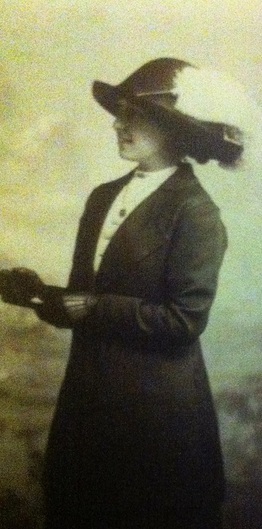
The first stood 4ft 9inches in her stockinged feet and was born in 1897, married, had two children and was widowed in 1919, after the Spanish flu killed my grandfather. As he was an early aircraft engineer, I’d have loved to meet him. However, Nanny Chivers, as she was to us, brought up the two boys single handed, worked as a seamstress to make ends meet and to buy the house that they were to live in. When my parents divorced messily, she took us in and gave us a home, despite being in her 70s. She provided stability at a difficult time.

Her lesson was that despite hardship, life can be very fruitful. Be positive.


The second was my first wife, marrying in my last year of teacher training, eventually succumbing to the ravages of cancer after 31 years, ten years ago. Della was the stability behind our family, a team player, enjoying teaching, in different scenarios, from infants to adults. Our family was a team effort, each had parts to play, enabling everyone to make the most of opportunities. The biggest lesson from this time was that life was worth living.

Every minute and every blessing was made to count. Be positive.


The third was instrumental in rescuing my teaching career, after a year in a school which, although purporting to support teachers, actually was so dogmatic that anything other than compliance was the route to personal abuse. Maida allowed me to talk my way into the job at her open plan, child-and people-centred school, to be able to work alongside a team who all went on to headship. I was allowed to think, to explore and to be creative, to embed quality learning and teaching into the very soul of my being.

Lesson: every person counts. Be positive.


The fourth is my very special M, who walked beside me, literally, as I talked my way back to health after Della died. Quiet and unassuming, her inner strength, insight and understanding enabled the right questions to be asked at the right time, sometimes promoting me to write my reflections in a journal approach, including (poor quality) poetry. Talking and writing my way back to health has allowed me the past ten years of active involvement in broad aspects of education.

Lesson; a healthy mind in a healthy body, a good recipe for life. Be positive.


My gratitude to these four special people is immense. I can say that I would not be the person I am without them. That is what makes them my remarkable people.

For that reason, I owe it to each to be positive and find pleasure in small moments. 

​I wonder who has had a similar impact on your life?  
  
​
0 Comments

I nearly Walked Away...

9/12/2016

0 Comments

 
Meeting an ex-colleague in town the other day reminded me of a period of my career when I actively considered my career in teaching.In 1978, Hampshire County Council became aware of a certain stagnation within the County education system.

People were staying in posts, or were stuck in posts, because there was little opportunity for movement. Heads, Deputies and senior staff had stayed in their little bubbles for 20-30 years (post-war needs) so the system was offered the chance of a little shake up.


At the time, for mainscale teachers, there were five scales of promotion, 1-5, which later were “improved” to A-E grades. Education is nothing if not inventive…  

I’d been teaching for four years by then and had hopes of a scale 2. Being in a one form entry Primary, there were only so many to go around. One colleague appeared to have her promoted scale 2 post for “keeping the needlework cupboard tidy”. By this point, I was responsible for topic related subjects and resources, games and PE and a couple of other more minor areas.

Being offered the chance of voluntary redeployment was a case of nothing to lose.  My name went on a list, together with two other colleagues, who were looking for scale 3 possibilities.

The phone call came one morning, with a request for me to visit a particular school with a view to a scale 2 for PE and boy’s games; a little bit of stereotyping perhaps, but I was still relatively young and naïve. The school trick was to invite people to come after school. Being on the other side of town, the head’s reputation had not travelled extensively, so, flattered, I was shown around the facilities and saw potential in the role being offered. I became a scale 2 teacher from the following September.

There was no problem with the PE and games; we won lots of competitions and leagues in a range of sports, notably football, rounders, athletics and gymnastics. I introduced a mini 5 a side lunchtime competition, open to all, with each team captained by a member of the school team, to spread avoid a centralisation of skills. Things were looking very positive.

The problems began to appear after the Christmas break, when a parent came to discuss her child’s concerns in understanding some maths. It was clear that the child had been coping on memory, and was quite accurate in arithmetic situations, where challenge was presented as algorithms, but that, in new problem areas, this was being severely tested. As I had been allocated an ITE student, I had some time to take the child out of the class to work with the available Dienes material, to explore place value and calculations. The head was less than pleased and I got firmly hauled over the coals; I wasn't using her method, as the only acceptable method... 

From this point on, to say that life was made very difficult would be an understatement. Books had to be handed to the head every week for scrutiny, to check that everything was being done according to her methods; there was to be no alternative. If the child didn’t understand, that said “something” about them.

The pressure became intolerable and, in the good old days of the Local Authority, fortunately both my own reputation as a teacher and the head’s reputation were well known. I was supported to make a move to another school, to work with a head who literally saved my career.

I worked with a team whose members all eventually went on to headship. It was an incredibly challenging time intellectually, but also the most developmental. Opportunities for personal development were offered and arranged. The head’s philosophy could be summed up as “employ well and offer opportunities, so everyone can grow”, and we did, feeding back from courses and other CPD. Some worked with inspectors; I was seconded to the Assessment of Performance Unit for a while to be part of a science project, from which experience, I was able to return to improve further the science opportunities for the children.

I’m grateful to Maida for enabling me to rediscover the joy of teaching, after a year in virtual purgatory. This made me a better manager of people, as I didn’t want anyone to be hurt by my actions, or possibly inaction on my part.

I determined that my staffroom, should I get to my goal of headship would be collegiate. This I achieved, acknowledged within Ofsted visits. Professional differences and providing the best education for children can be explored through discussion, rarely through dictat.

We currently have a teacher crisis; many leave, too few are training. We do need to “love the ones we’ve got” more and more.

The dictat today appears more Government-led, interpreted down to the chalk-face. In the absence of local support, individual teachers may well feel vulnerable; at heart the system is premised on individuals, not collectives. Heads worried about Ofsted ratings can be seen to be putting additional pressure on staff to achieve or to evidence more and more.

Pressure absorbs thinking time, which is always at a premium, distracting teachers from decision making at an individual level in their planning and interactions. It leads to stylised approaches to be able to demonstrate an ability to use certain “techniques”, either school determined or from specified “experts”, when thinking for yourself needs to be the essence of developing good teachers.

There were other times when to walk away might have been the easy option. I’m very glad I didn’t walk away; I loved teaching and ultimately headship, where I still took every opportunity to be in learning situations, class, group or individual.
​

Once a teacher, always a teacher, but able to rewrite the script if necessary.
0 Comments

A sense of place, locality

3/12/2016

0 Comments

 
We take what’s outside for granted!

Going outside provides the easiest set of free resources that any teacher could want, the buildings that make up the locality. Of course, if your school is set in 50 acres of rolling fields and woodlands, you might beg to differ, but they can offer an alternative environment for study.
.
Some of the best topics, projects, thematic approaches that I’ve undertaken, have had housing or settlement at their heart. The central idea of people needing a place to live is quite a central one to human existence and in many ways provides a hook for young children to hold onto. They understand the need for shelter, warmth and keeping dry.

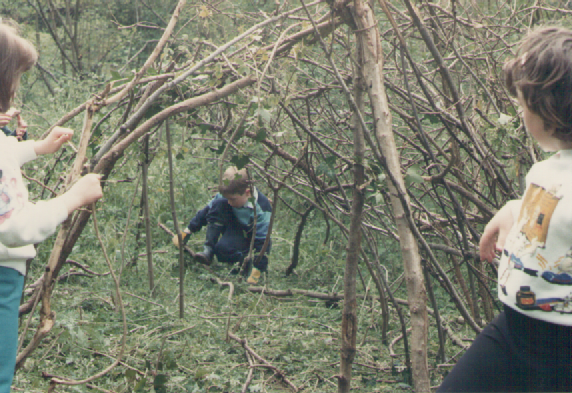
Having a local woodland available allowed me to take an infant class to make shelters, from scratch. At the same time, we had access to a Romany heritage museum, being run by a traditional van maker, who had a bender tent in the grounds. It gave the children insights into simple structures. This was extended with a second trip, to the Weald and Downland Open Air Museum, at Singleton, with a collection of houses from Saxon times, some moved and rebuilt, a few built from records as examples.
​
Picture
In another school, I started the topic with an “I spy trail” creation project with the local Secondary art (photography) department support. Children, working in small groups, started at the “village” centre and went in one of six directions. They had to decide on and record (Juniors drew, Secondary photographed) twenty different features along the route. On return, they swapped drawings and had to follow the trail. On the return to school, the trails were interpreted as sketch maps, with written instructions.
​
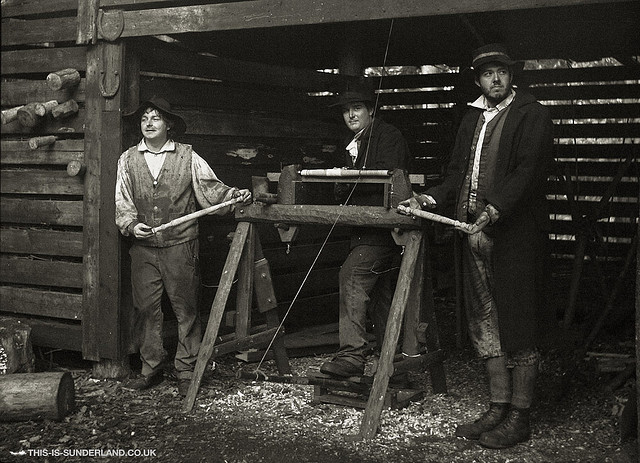
Within our locality, we also have the Iron-age Farm, which started on the top of Butser Hill, as an experimental archaeological site, developed by the late Peter Reynolds. This has been redeveloped in Chalton, south of Petersfield, still with an experimental brief, but more of a visitor experience. These early buildings were a source of great interest, with exploration of the basic materials, where they might have been sourced, reflections on how they were cut and prepared with very basic tools, moved from distance to where they were needed. Working at heights without scaffolding etc. Challenging their preconceived ideas. The experimental site introduced early textiles, food storage and other basic needs.

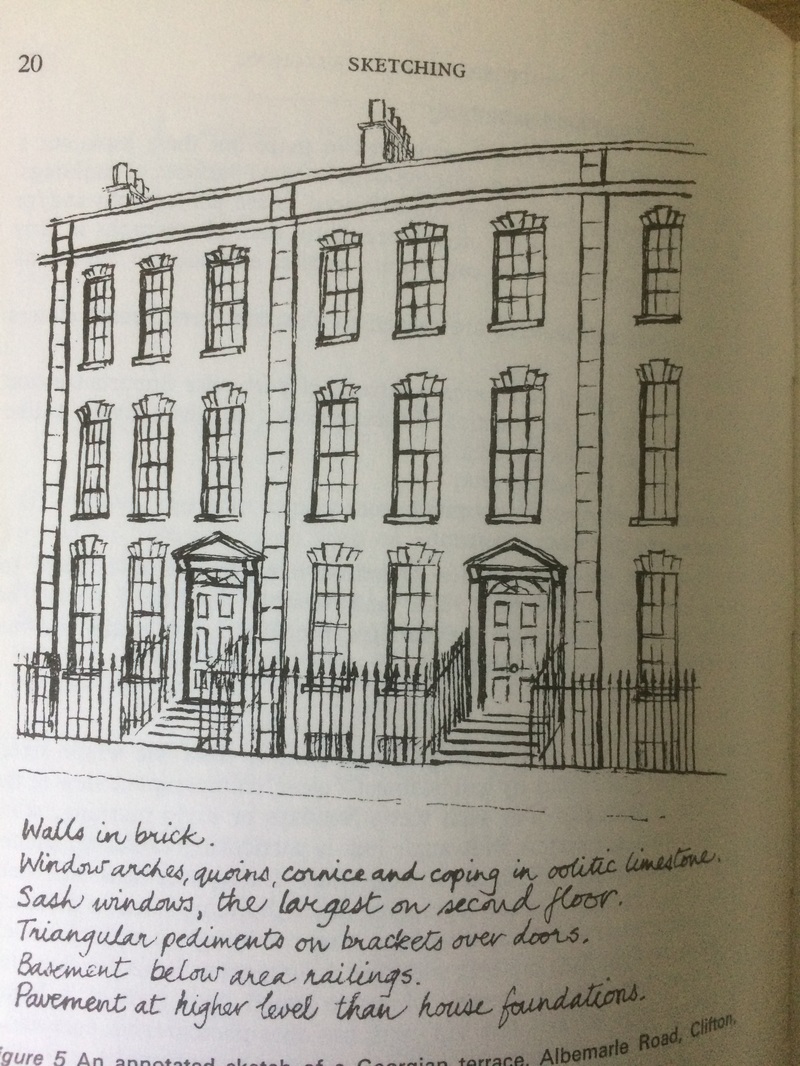
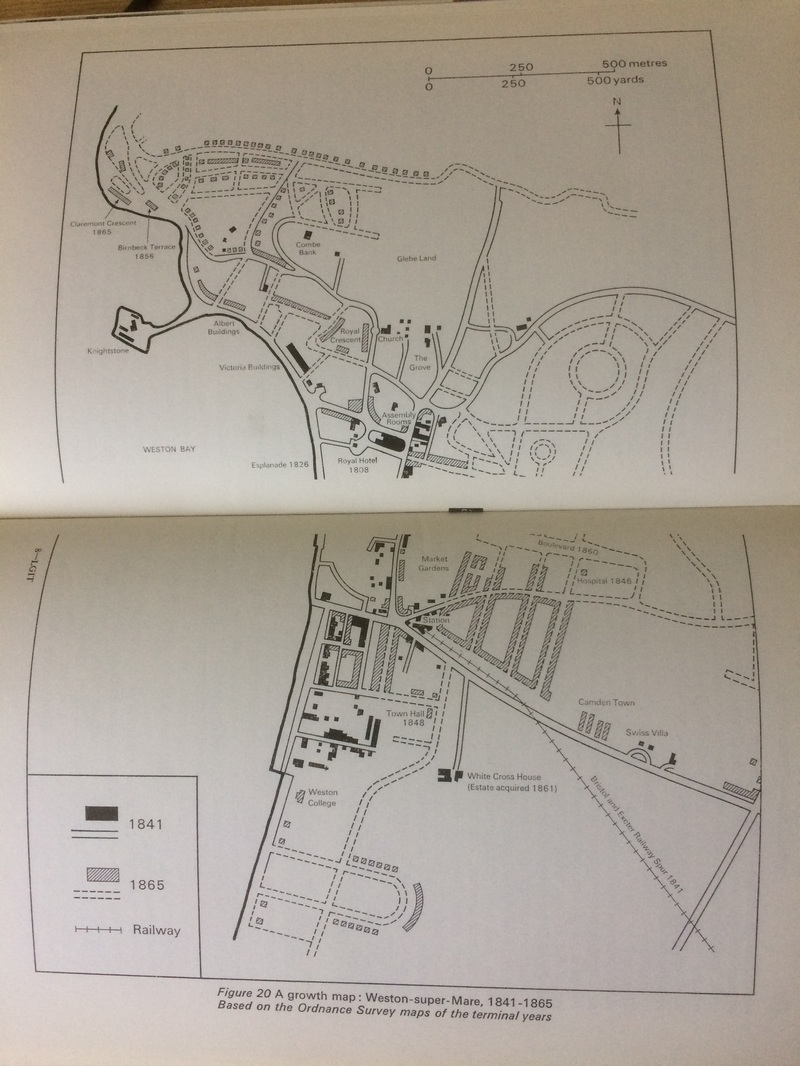
A mapping project in another setting, looking at the village development over a few hundred years of maps, sourced from the County archive, led to a drawing and investigation walk to the village centre. The Georgian fronts of the village centre, had been established as false “fashion” fronts to earlier tenements, where inhabitants were explored through earlier histories and census returns, which showed several families in each building. Some obliging local families opened their housed to show the features of the earlier houses that still existed. Finding Roman tiles used as a part of the local church was linked to one child digging up a tile in his garden; verified by the County museum service.

Sketching was a key element of each topic, used as a means to encourage the children to look closely.

Where possible, these were supplemented with photographs; much easier now with digital. Photographs were the basis for recall and retelling, which supported poorer writers to retain some order and organisation.

Basic pictures were given to support dialogue with each other and with the accompanying adult(s), who also had some additional information sheets to share.  

Drawing sketch maps secured some feeling of spatial awareness, extended with giving instructions to get from one place to another, inside school or within the locality, but also extensive use of local maps to aid orientation.

Written reports and instructions were developed, as were histories of some of the individuals who had made up part of the developing narrative; the local Lord of the Manor and his wife were buried in the church, while some of the local people’s headstones were in the churchyard.

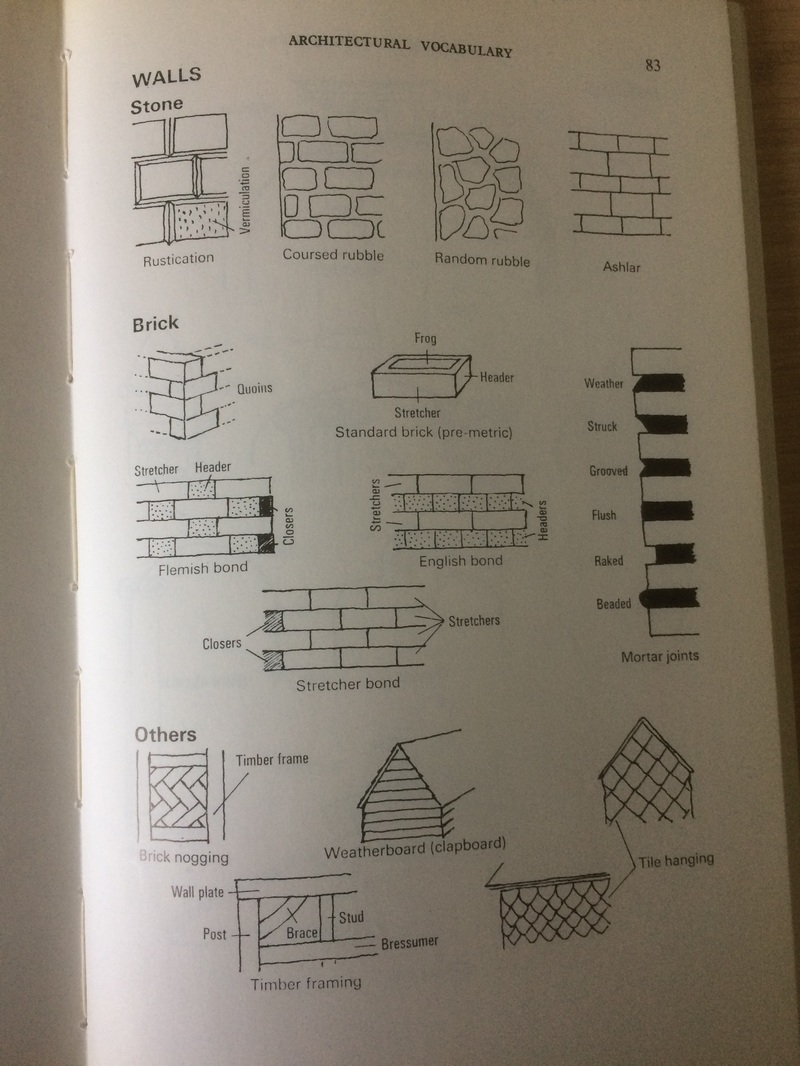
​Clay modelling allowed making bricks and creating "dwellings", which in turn became the centre for story making.

​A museum of tools and building materials allowed exploration of modern approaches. Local builder dad talked about some of the issues in building a house.

​Making concrete of different consistencies in margarine tubs allowed some stress testing of materials. 

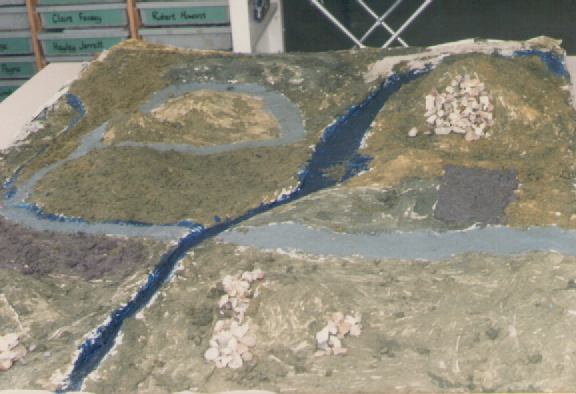
​Creating a 3d model of the "Village with three corners", derived from a reading scheme, alowed children to picture and develop storylines more clearly, using little model people.  
 
Just opening children’s eyes to what is around them can give them something to talk about with their parents, particularly if they walk the same areas together. This can lead to further personal exploration, which adds to the general stock of knowledge and shows that the child’s education extends beyond the classroom.
0 Comments

    Chris Chivers

    Long career in education, classroom and leadership; always a learner.
    University tutor and education consultant; Teaching and Learning, Inclusion and parent partnership.
    Francophile, gardener, sometime bodhran player.

    Archives

    March 2021
    January 2021
    July 2020
    June 2020
    May 2020
    April 2020
    March 2020
    September 2019
    June 2019
    May 2019
    April 2019
    March 2019
    February 2019
    January 2019
    December 2018
    November 2018
    October 2018
    September 2018
    August 2018
    July 2018
    June 2018
    May 2018
    April 2018
    March 2018
    February 2018
    January 2018
    December 2017
    November 2017
    October 2017
    September 2017
    August 2017
    July 2017
    June 2017
    May 2017
    April 2017
    March 2017
    February 2017
    January 2017
    December 2016
    November 2016
    October 2016
    September 2016
    August 2016
    July 2016
    June 2016
    May 2016
    April 2016
    March 2016
    February 2016
    January 2016
    December 2015
    November 2015
    October 2015
    September 2015
    August 2015
    July 2015
    June 2015
    May 2015
    April 2015
    March 2015
    February 2015
    January 2015
    December 2014
    November 2014
    October 2014

    Categories

    All
    Assessment
    Behaviour
    Differentiation
    English
    Experience
    History
    Home Learning
    Inclusive Thinking
    Maths
    Parents
    Science
    SEND
    Sing And Strum
    Teaching And Learning

    RSS Feed

    Picture
    Click to set custom HTM L
Powered by Create your own unique website with customizable templates.