
Chris Chivers (Thinks)

  • Home
  • Blog-Thinking Aloud
  • Contact
  • Contents
  • PDFs
  • Sing and strum

Imagery

21/3/2019

0 Comments

 
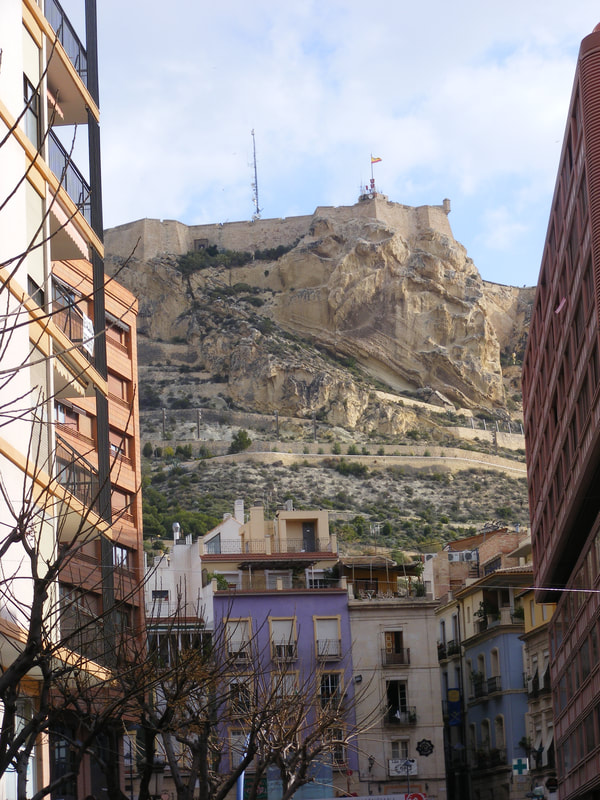
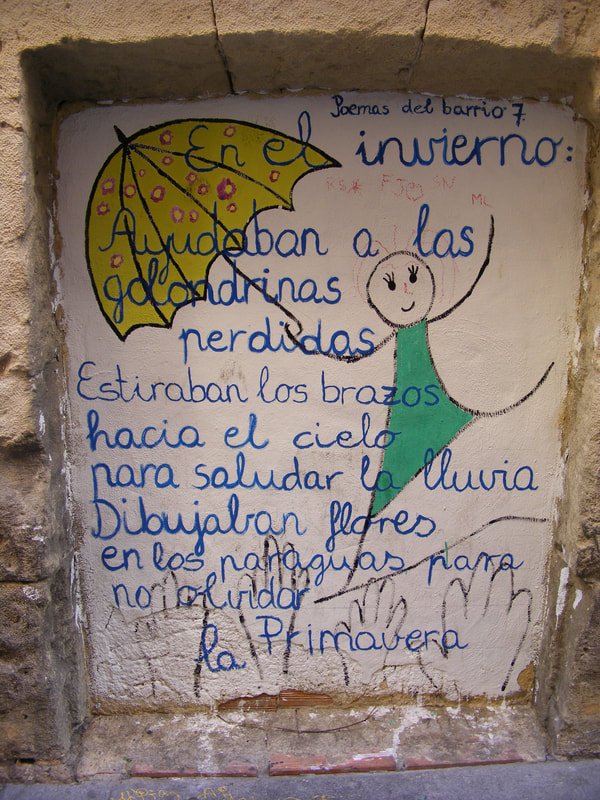
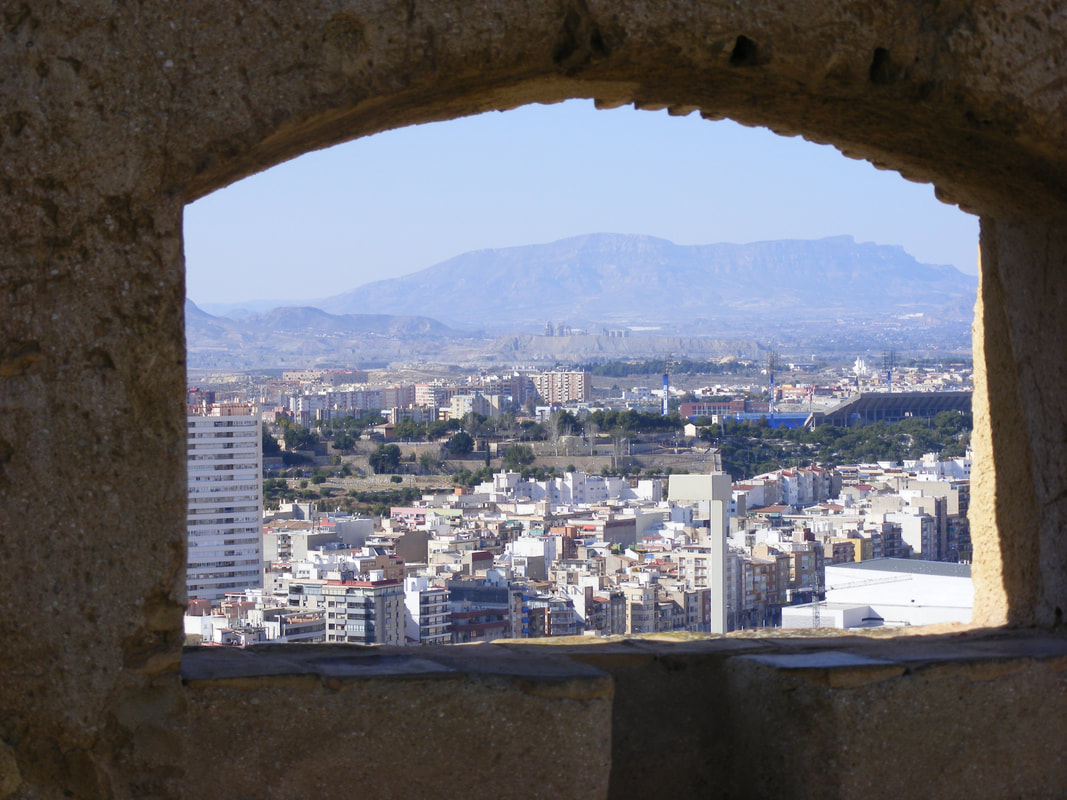
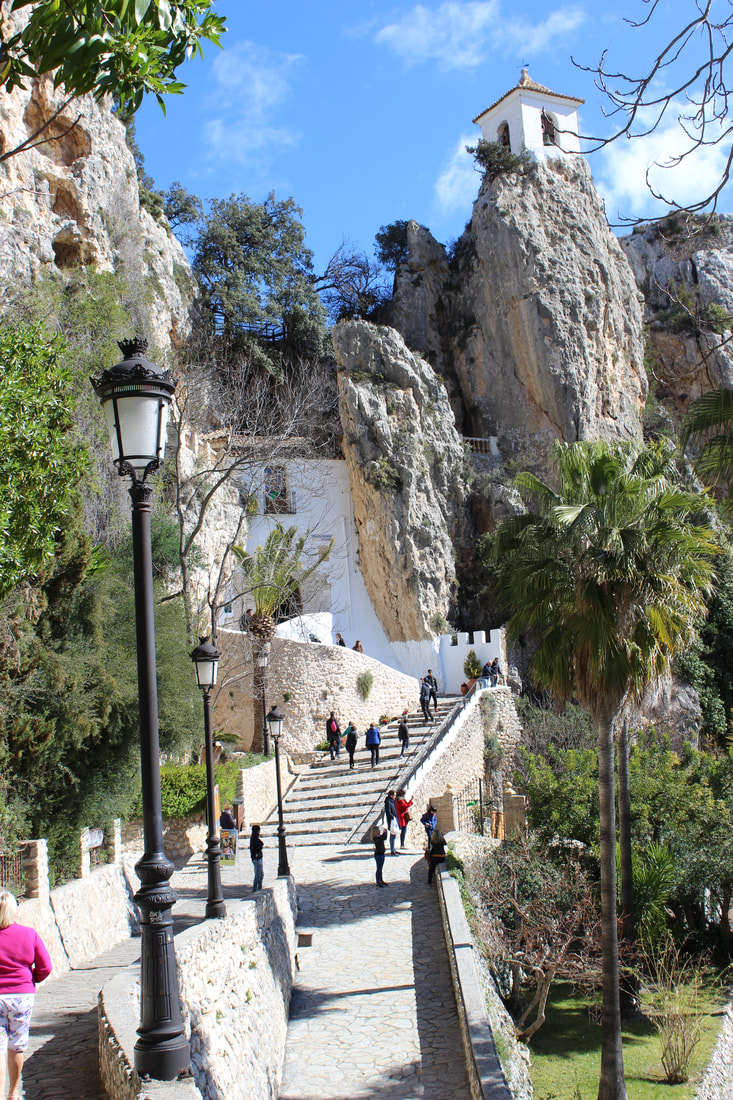
The pictures above are from holidays to Alicante.

Why do we take and keep photographs?

In some ways, it’s an easy answer, because we want to remember someone, some thing or a place that we have visited. In other areas of life, we might make notes or lists.

They are memory joggers, aides memoire, because life’s busy and we forget things, often the little details, which are then remembered in detail because you’re looking at a specific photo. Remembering appears to be the new definition of learning. The amount of information that passes by us in the course of even a short period of time can be lost, or, more likely, replaced by subsequent imagery and associated experiences. We are sensory beings, from birth.

This week, the idea of imagery has cropped up in virtually every conversation that I have had with ITE students, uni and SCITT. This has been prompted by interrogation of lesson purpose and the value of the imagery used.

If one assumes that a teacher is the keeper of the lesson narrative, this, in turn develops the notion of the keeper of the images. The images in a teacher’s head are translated through talk, diagrams, pictures, artefacts or direct experiences; the pedagogical choices of each lesson. This is now being shared as a concept as dual coding, but I would contend that this has been a truism for every generation of teachers. One significant change over time has been the technological improvements that enable an ever broader range of imagery to be shared in a classroom, such as video enhancing the stills to moving images.

Learning to “read” the images presented is a key element of early learning; description encouraging reflection, similarities and differences, inference and deduction, working towards hypothesis and imagination. The whole, if supported by an engaging talk element, discussion within a small group, dialogic discourse with adult lead enables a broadening of vocabulary, embedding concepts more firmly in memory.

Imagery impacts on overall planning, as teachers “conceive” of a learning journey or narrative, that then becomes a scheme of work that ensures each lesson “chapter” has significant “sub-headings, that then can be reviewed before moving to the next chapter. The images at the head of this blog were taken in Alicante. In order to driver there, I ensured that I had a mental map of the journey, with the sub-headings as the key towns that we would encounter en route, so could reflect on choices and adapt to any deviations away from the sat-nav directions.

Teachers need to “narrate” a coherent story, in every subject, supported by carefully chosen images that amplify the story.

It’s a bit like an early reading book, where the pictures add significantly to the written storyline. Interrogation of both add to the overall experience.

Open the pages carefully, sharing appropriate images in order, use quality modelling of language and the whole learning story becomes available.

Teaching minus images leaves talk, with mental imagery totally dependent on stored images which may be incomplete or may not exist, so disables the learner from participation.

If they can’t “see” it, they can’t manipulate it. Let’s make “seeing” and enhancing talk more overt.

0 Comments

A "Dinosaur" Looks at Curricular Extinction

6/3/2019

0 Comments

 
There is a truism in natural history;
​
You probably don’t know what is currently becoming extinct, because you’ve never see it. Reports of the demise of animal and plant populations may not affect people who don’t spend time outdoors, nor know what they are looking at when they are out and about.

And it can be a case of if you can’t see it, or name it, it probably can’t be very important.

But, every minute living entity has developed to adapt to it’s surroundings, sometimes becoming part of a broader food chain.

And, when it’s gone, it’s really difficult to get back again, especially if the special habitats required are altered or damaged.

Extinction can be caused by one-off catastrophic events, or, perhaps given the current climate debate, slow changes that gradually alter life patterns.

Picture
In many ways, it’s exactly the same with schooling.

Schools are habitats where young organisms spend a part of each day hopefully soaking up the knowledge and life skills that enable them to fully participate in the world. Inevitably, like all organisms, plant or animal, they grow and develop at different rates. While that is something that nature caters to, school organisation and external “quality assurance” can sometimes give the impression that the fledgling is somehow of a less than adequate standard. Given the complex nature of the human organism, being deemed in need can, in itself, become a further depressant on future achievements.

Unlike nature, school habitats are created and controlled completely by adults. What the adults choose to put into the school environment demonstrates the values that they hold; broad, balanced, rounded experience, or narrow and very focused on a specific end point.

There was a time where organisation was completely controlled by local needs and available expertise. There was a focus on maths, English in it’s different elements, talking, reading and writing, but also topics for interest, covering history and geography. Science, in the 1950s was often limited to nature and phenomena, like shiny things; playing with knives and spoons. Music was from the radio, PE was outdoors on the tarmac on rush mats. There was an art and making table, which is the source of many of my earliest school memories.

The 70s were developmental years, introducing some additional structures into experiences, led by thinkers such as Zoltan Dienes in maths and Seymour Papert in early ICT (Logo). Science education grew stronger, with schemes like Nuffield Science 5-13, offering structure, background reading, knowledge and pedagogy. Other subjects also took on greater structure, as various advisory teachers brought their expertise to bear on generalist colleagues, through twilight sessions at local Teachers’ Centres, or you just chatted with one of your colleagues who explained what you wanted to try.

Working in Hampshire, a broad, balanced, structured, relevant curriculum was developed and in place across large parts of the County in 1986.

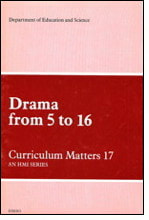
“HMI were also supportive of developmental thinking. Curriculum Matters was a series of 17 booklets published by HMI between 1984 and 1989. They were intended as a contribution to the 'Great Debate' about the nature and purpose of education which Prime Minister Jim Callaghan had called for in his Ruskin College speech on 18 October 1976.”
​
You can see more of the “Raspberry Ripple” series at http://www.educationengland.org.uk/documents/hmi-curricmatters/
Picture
​The 1987 National Curriculum, therefore, when audited, provided a 95% correspondence with existing practice. A few tweaks and we were “good to go”. We kept most of our experienced teachers, so systems were not compromised.

Subsequent revisions put pressure on schools yet again, but, this time, as a result of change, some experienced colleagues decided to leave, rather than spend another period revising plans and working approaches. It took a lot of effort, from 1990-2005, to hold the breadth, balance and quality of what we were offering. As people left, new colleagues had to be inducted and mentored into the breadth on offer. This was, for some, particularly after the introduction of the National Strategies, an extreme challenge, particularly as their training had been based on that approach, through Government requirements.

In 2005, the last full year of my headship, we achieved SATs scores in the 90s, (L4+ with 50% L5 in some subjects) across all tested subjects. Talking with that class’s year 6 teacher recently, we reminisced about the full year that they had had, with a nod to SATs from around Easter. The breadth and depth of their varied studies had prepared them for reading and answering questions, across each subject.

Then came my catastrophe, the death of my first wife from cancer, a teenager at home requiring support and so I became extinct in that role. It required a bit of nurturing to re-establish myself in school habitats, in a series of support and advice roles. A bit of a use for ageing experience?

Of course, a significant systemic catastrophe (my thoughts) occurred in 2014, with an almost seismic alteration to seemingly every aspect of education. It was not an evolution, as whole swathes of prior working were cut down dramatically, leaving schools with the tattered remains of what went before, seeking to understand the new requirements and every school independently having to rapidly create structures that ensured curricular stability.
An analogy would be the wiping out of vast areas of the rainforest, with commensurate wildlife damage. See the potential demise of the Sumatran Orangutan, as a result of a dam project.

The 2014 vision for the curriculum was so heavily maths and English focused in Primary schools, that more “minor” subjects were marginalised, from their earlier place as “foundation” subjects; to me the word foundation implies that on which the main structure is built.

In 1970, James Britton said that “Reading floats on a sea of talk”. You could extrapolate this to talk floating on a sea of experience, with someone to help, guide and tell...
This has impacted my whole career, in that the broader curriculum has offered the areas for exploration, for conceptualisation, for thought; playing with ideas. In so doing, building vocabularies that can then inform what is being read, if the words are to evoke imagery in the reader’s head. A rich curriculum offers the potential for a rich vocabulary, which, in turn enables engagement with further spoken and written challenge.

Giving children something to think, talk, read and write about, to me are central to learning. Passing children from Primary to Secondary with a love of learning is key to future success.

By putting the wider curriculum back to the foreground, it has highlighted the demise over a relatively short period, of the Cinderella subjects. The next period will be one of sharing knowledge and expertise across the board, and, in some ways, social media can be a great help, rather than seeing each school making everything up from scratch.
Like all things that are bordering extinction, it will take the identification of need, the recreation of supportive habitats, appropriate resourcing and regular oversight and nurturing, if subjects are to re-establish themselves in the Primary experience.

And it may need a period of play by teachers seeking to reacquaint themselves with areas that they may have allowed to become rusty through less use.
How about we set the first challenge to make every teacher as good in each subject as the best in a school, cluster or area? Share ideas; collaboration not competition.

Let’s rebuild the foundation.

Ps. I could have used the story of Winchester Cathedral, whose Norman foundation was on tree trunks, which needed to be excavated and replaced to avoid the cathedral falling; foundations are essential to strength, rich habitats are the foundation of successful ecosystems.
0 Comments

A letter to my MP, re Brexit.

2/3/2019

0 Comments

 
2.3.19
​
Suella Braverman,
House of Commons, London SW1A 0AA

Reference democracy and a public forum.

Dear Ms Braverman,
For the first time in my voting life, I was moved to attend your open meeting at the Kings Church in Fareham on 1st March, mainly because of the impact that Brexit will have on the lives of many current family members and certainly my children and grandchildren for longer than for me, through the loss of Freedom of Movement.

I have to say at the outset that I was disappointed by the organisation and tone of the meeting. While I can accept that it was an attempt at open democracy, out of a 75-minute meeting, you spoke for 40-45 minutes, seemingly in self-justification of your personal choices on this issue. The subsequent questions enabled a reprise of many of the points already made, and in doing so, essentially encouraged a body of opinion, which ultimately was prepared to shout down any dissenting questions. You may not be aware that your own tone, initially presentational, with some attempt at demonstrating understanding towards alternative views, became hectoring towards any questioning of your position during the Q&A session.

Your factsheet, placed on seats before the session were covered during your 40-minute speech, but, in both, economy with the truth enables part fact to be seen as gospel. With a son-in-law who is also a barrister, over time I have been able to see how narrative can be created to suit any purpose, whether or not the speaker fully believes it or not. This is the current state of British politics. While I accept that life is often a judgement call, your allusion to your crystal ball at different points during the evening is probably as good as mine.

For anyone who follows Edwin Hayward or Steve Peers on social media, the detail and complexity of Brexit are laid bare. For it to be reduced to a few routine sound-bites is demeaning.

The NI backstop is there, not because NI becomes a third country, but because the UK becomes a third country, with a hard land border with an EU nation, which is then subject to international laws and treaties, not least the Good Friday Agreement. You wouldn’t want your neighbours hopping over your fence to take a short cut, which effectively is the ERG argument; we can get around this…

The WA is an agreement to leave a “contract”. Leaseholders and mortgage holders are tied into contracts with another party. To leave either early results in a penalty to be paid through the loss of earnings from the rest of the lease. The £39 billion is a release clause payment. It is interesting that your much-vaunted “Malthouse Compromise” suggests paying £10 billion a year during any transition, which may be compromised by WTO details.

The Political Declaration is a statement of intent to carry on talking should there be an agreement, with some general areas to be discussed, not pinned down in detail, as that is what the Government representatives, including the Prime Minister signed up to in late 2018. It is deliberately vague, to allow future discussions to be necessarily broad.

Freedom of Movement is fast becoming a rhetorical red herring, in that, at no stage has the Government organised a registration system, despite being reminded on numerous occasions that it was for us to do so; three months grace, no job, no benefits, as with other EU countries. As a result, a relatively easily sourced workforce, highly visible in many front-line industries, is fast disappearing, causing business distress, closure and relocation, while immigration from non-EU countries is still rising, despite being in the Government’s “control”.

Malthouse no deal “transition” may well end up being yet another pipe dream, in that it has already been rejected by the EU, but, while words are played with in Brussels, we may well be offered a fudge, which superficially satisfies a few extra MPs. It seems less about the future health and security of the country and more about sustaining the Conservatives in power.

Your own Government produced a series of impact papers, a summary of which was recently published. Every Brexit related scenario showed negative impacts on the UK, with some areas extremely hard hit. Brexit, in part, is responsible for swathes of industry relocating into the EU to ensure business continuity.

Your “myth” busting, like all myth busting, creates more myths, in that they are potentially small truths elevated through your political need to present a particular argument.

Dover-Calais, port entries. The chairs of port authorities can be overridden by the regional and national governments, so, while there may be good intentions, there are no guarantees.

Your repetition of technological fixes to the NI border is a direct myth. No border has a “technological fix”, although there are computerised systems that enable tracking of goods. These are not currently in place, nor will they be on March 30th. Checks still need to happen at borders to avoid smuggling in various forms. In extremis, this will slow queues, leading to disruption.

Your mention of agencies charged with guaranteeing various qualities of goods in transit. Given that the UK agencies currently work closely and under the auspices of the EU agencies, ours would have to go through a process of validation to agree standards. One notable issue is the use of vets to validate meat exports.

The UK, through the current EU agreements, is enabled to sell goods freely with around 70 countries, including the EU 27, under agreed terms that are better than WTO, including now Japan. This offers huge potential, that will disappear in 27 days’ time. At the same time the EU is negotiating with India, so the vast proportion of the world is available to us, if we are EU members; it’s the benefit of a membership fee. You get cheap general access, not having to pay piecemeal. It’s interesting to note that Germany already export more to China than we do, under the current rules. Maybe we just don’t make what they want or need?

We may well be about to throw away access to over half the world, to have to seek to replicate all those current agreements, in search of agreements with significantly smaller countries, who will probably come into the EU umbrella in due course. In the meantime, as a much smaller entity, desperate for trade deals, we will be taken to the cleaners by larger countries, who will use their economic muscle to tighten any future deals; eg the recent US announcement on agriculture. It’s a pity that the UK government and MPs don’t listen to the economics of farming. One thing we need is food.

After thirty-three months of “negotiation”, based seemingly solely on the premise that the EU will “blink first”, we are twenty-seven days away from the first self-inflicted wounds ever recorded. There is no country in the world that only operates on WTO rules.

The biggest danger to this country is the loss of easy access to security cooperation. While NATO operates at a supra-national level, the police and other security services have warned of the dangers of no access not data files. This may also include the Galileo satellite system.

Under your much-vaunted no-deal, using my crystal ball and my historic gypsy heritage, on April 1st, when markets open, there is likely to be a significant run on the pound. Speculators who have already moved their wealth to a safe currency, will then be able to return with even greater wealth, in order to buy up assets cheap. Reduced FoM will decimate agricultural labour just as planting season starts. British lamb farmers, currently lambing, will have excess stock, as they may not be able to sustain 40% tariffs. By the end of the first week, if there have been hold-ups at the docks, supermarket stocks will dwindle, causing panic buying. It was recently reported that supermarkets are talking with police about protections.

We are entering a period of such uncertainty and potential insecurity, unprecedented in my lifetime. There are more dangers than bright spots. Brexit is an unnecessary political act. We currently enjoy a disproportionate representation in the EU parliament. Had this been used to effect, the need to reform aspects of the running on the EU has been long telegraphed. Being a part of discussion is a stronger position than sitting outside.

Speculation has been behind some of the recent 33 months. Movements in currency allow speculators to take advantage of moving money from one currency to another. The example of Crispin Odey, a Tory donor, making significant amounts after the referendum is a well-publicised case in point. It is even speculated that during the referendum night, Nigel Farage announcing loss or winning caused market fluctuation.

My concern, as I said at the beginning, is the future of my children and grandchildren. If it takes ten or more years to regain our current status, I will hopefully have reached 76. However, it will last the whole childhood of every one of my grandchildren.

Twenty-five years ago, following my first wife contracting breast cancer, we bought a very small cottage in France that became a “life dream”. I have kept it, following her death, as a place of escape, available to the whole family. My sister retired to Spain, buying a house and living on her NHS pension, with the ubiquitous bad back, which had necessitated many hospital visits. Living in the warmth of Spain, she can exist on low dose painkillers, swim and walk to enable a healthy lifestyle. My step-daughter is married to a Spanish national and lives in Portsmouth and both speak Spanish when out, for her to practice after her Masters’ study. Recent reports of attacks on others for “speaking foreign” are very concerning.

This is your “yellow vest”, Brexit Britain. If you are right, then everything will go swimmingly. Your assertion that “it may get worse, bumpy” runs counter to your colleague assertion that it would be “easy”. If it goes badly, as I and other remainers fear, it affects everyone, apart from those who have been able to ring fence their wealth, or who have made money from speculation.

The public are impotently watching the politics and in-fighting, holding our breath. Staying in the EU would mean current stabilities. Every other scenario holds the prospect of damage to the country, socially, morally and financially. Satisfying a small group will ultimately potentially lead to the rise of populism that you sought to minimise through quoting Italy and Greece, two very different economic scenarios. However, with reports that the Northern League are being investigated for Russian money interference, it rather demeans your argument, if people like Carol Cadwallader is to be believed, that our own politics is being infected in the same way, but potentially from the US with their own agendas, as highlighted by the US ambassador this morning and recent pronouncements on the NHS.

I hope that, by April 5th, you will be able to hold another public meeting and face whatever the new reality brings. This is in your hands.

Yours sincerely,
Chris Chivers


0 Comments

    Chris Chivers

    Long career in education, classroom and leadership; always a learner.
    University tutor and education consultant; Teaching and Learning, Inclusion and parent partnership.
    Francophile, gardener, sometime bodhran player.

    Archives

    March 2021
    January 2021
    July 2020
    June 2020
    May 2020
    April 2020
    March 2020
    September 2019
    June 2019
    May 2019
    April 2019
    March 2019
    February 2019
    January 2019
    December 2018
    November 2018
    October 2018
    September 2018
    August 2018
    July 2018
    June 2018
    May 2018
    April 2018
    March 2018
    February 2018
    January 2018
    December 2017
    November 2017
    October 2017
    September 2017
    August 2017
    July 2017
    June 2017
    May 2017
    April 2017
    March 2017
    February 2017
    January 2017
    December 2016
    November 2016
    October 2016
    September 2016
    August 2016
    July 2016
    June 2016
    May 2016
    April 2016
    March 2016
    February 2016
    January 2016
    December 2015
    November 2015
    October 2015
    September 2015
    August 2015
    July 2015
    June 2015
    May 2015
    April 2015
    March 2015
    February 2015
    January 2015
    December 2014
    November 2014
    October 2014

    Categories

    All
    Assessment
    Behaviour
    Differentiation
    English
    Experience
    History
    Home Learning
    Inclusive Thinking
    Maths
    Parents
    Science
    SEND
    Sing And Strum
    Teaching And Learning

    RSS Feed

    Picture
    Click to set custom HTM L
Powered by Create your own unique website with customizable templates.