This post is linked to a session at PedagooHampshire in September, and is offered as a start point for discussion.
The school holidays area upon us and across the country, the opportunity will be taken to share experiences with children.
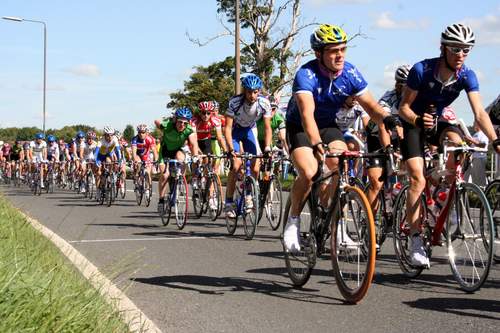
A rite of passage can appear to be learning to ride a bike and that I want to take as my analogy for this post, especially as this week sees the end of the Tour de France, with the Vuelta in a couple of weeks, the Olympics a few weeks later, showcasing the pinnacle of the rider ability.
In thinking about riding a bicycle, I am reminded of the Chinese proverb; Tell me, I’ll forget. Show me, I’ll remember. Involve me, I’ll understand.
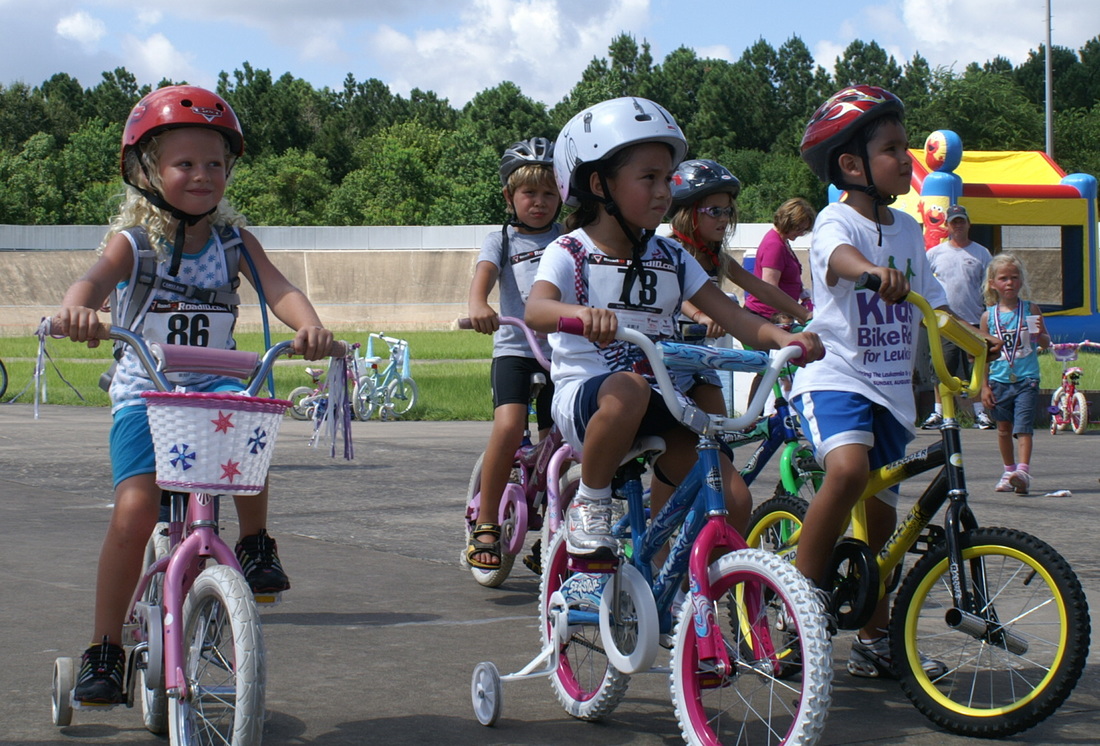
You probably wouldn’t try to teach a child to ride a bike by sitting them down and just talking to them about it. It is more likely that they are encouraged onto the seat, with or without stabilisers, with an adult holding them steady and walking along beside them, giving encouragement and advice in equal measure, leading to a point where some kind of alchemy tells the adult to let go and let the child free. At which point they quite often fall off. They are encouraged back onto the bike and offered some further support while they gain a little more confidence, with the adult slightly releasing their hold.
Once the adult is confident that the child is capable, they encourage some independent practice and refinement of technique. Eventually they have sufficient competence to be allowed to ride alone without supervision or support. They are still likely to have incidents, but adult judgement about their decision making skills is likely to be a determining factor in an agreement that they can “go it alone”.
The school holidays area upon us and across the country, the opportunity will be taken to share experiences with children.
A rite of passage can appear to be learning to ride a bike and that I want to take as my analogy for this post, especially as this week sees the end of the Tour de France, with the Vuelta in a couple of weeks, the Olympics a few weeks later, showcasing the pinnacle of the rider ability.
In thinking about riding a bicycle, I am reminded of the Chinese proverb; Tell me, I’ll forget. Show me, I’ll remember. Involve me, I’ll understand.
You probably wouldn’t try to teach a child to ride a bike by sitting them down and just talking to them about it. It is more likely that they are encouraged onto the seat, with or without stabilisers, with an adult holding them steady and walking along beside them, giving encouragement and advice in equal measure, leading to a point where some kind of alchemy tells the adult to let go and let the child free. At which point they quite often fall off. They are encouraged back onto the bike and offered some further support while they gain a little more confidence, with the adult slightly releasing their hold.
Once the adult is confident that the child is capable, they encourage some independent practice and refinement of technique. Eventually they have sufficient competence to be allowed to ride alone without supervision or support. They are still likely to have incidents, but adult judgement about their decision making skills is likely to be a determining factor in an agreement that they can “go it alone”.
 |  |
At every stage of our lives, we are faced with novel situations, some of our own choosing, when we are returned the phase of being a learner, or less independent that we thought. New job, new child, new technology, problem with heating, plumbing, car, health, when we may have to call on expertise outside our own.
A particular example for me was joining the beginner guitar class at a school in my early career and literally starting from scratch. Motivation being high, I practiced as required and a bit more for good measure and managed to learn the seven chords with which I was able to accompany a number of simple, but enjoyable songs for children. Adding a few more over time extended the repertoire and as a head, several years later, I was then happy to take both Key Stages for a singing half hour to enable the staff to meet as a group.
Reading the excellent Tom Sherrington http://headguruteacher.com/2013/01/06/behaviour-management-a-bill-rogers-top-10/ writing about a part of his early career, where he describes feelings akin to inadequacy, echoing with each move I made as a teacher. While confident in my ability to teach, there was always a period of acclimatisation before comfort in the context settled in.
We have phrases like “fish out of water” and “out of his/her depth” to describe these feelings at an extreme. As we are at the beginning of a holiday with significant staff change usual for September, many teachers will feel the same. They may be seen as “master” teachers, but may well experience insecurity.
Apprenticeship is a teaching method used by educators to teach students how to solve problems, understand tasks, perform specific tasks, and deal with difficult situations (Collins, Brown, and Newman 1989).
The phases of apprenticeship as articulated by Hansman (Hansman, C.A. Context-based adult learning. New Directions for Adult and Continuing Education, 89, 43-51.2001) are:-
1) Modelling. Showing the bigger picture to demonstrate both the skills and processes. Reflection
2) Approximating. Trial and error phase, copying the original. Reflection.
3) Fading. The master “fades” as the student tries more alone. Reflection.
4) Self-directed learning. Learning by doing. Finding the points where reference to master or other source is necessary. Reflection and refinement.
5) Generalising. Bringing to bear the experiences from a range of sources to make personal use of a broad range of skills and knowledge. Reflection, refinement and creativity.
I once worked with a PE inspector who used a very simple mantra that summed this up as whole-part-whole, with specific skills being added and practiced before being put back to whole game. Modelling came from within the group, feedback from the participant observer/coach. Time was given to reflection, evaluation and paired challenge.
According to Pratt (Pratt, D.D. (1998) Five perspectives on teaching in adult and higher education. Malabar, FL: Krieger Publishing Company), successful development through apprenticeship involves three key factors, the learning process must be active, social, and authentic. All three interlink to ensure that students understand the processes within which they are required to work, in real world situations. They can see the point of what they are doing.
Master synonyms include pedagogue, skilled person, expert, guru, leader, tutor, guide, mentor and also more dominant words such as boss, captain, chief, commander. The first group is more likely to describe teachers in the classroom, but there are some whose nature takes them more towards the latter group.
Apprentice synonyms include learner, novice, disciple, pupil, with disciple suggesting discipline, external and self-imposed.
So how does this all help learning and teaching?
We need to have a clear picture of where the learning is going and share it (whole picture), make activities enjoyable, challenging and social where possible (context), engage fully within the process (including purposeful observation) and tweak as necessary giving supportive feedback, review at different points to keep a steer on the direction of travel.
We all, at some stage, have the need to look something up, ask a friend or colleague, when we get to a point where we are “stuck” with an idea. Apprenticeship offers the potential for this to happen. Design and technology tasks are well suited to this end, as they offer the chance to identify the “resource tasks” to prepare for “capability tasks”, where the skills are developed within projects. Other subjects have their equivalents.
The principle is, “You need this to be able to do that”, and that probably sums up a lot of education, the use and application of a sequence of skills or capabilities that define a subject. (See current National Curriculum for examples).The problem is often that the skills are identified and taught outside a useful context, so in the absence of application, the skill falls into disuse, or they are sequentially taught with an assumption that the child will make the necessary links, whereas, in reality, apart from a few who can do so, it is likely that links with prior learning and associated ideas need to be made overt.
The hallmark of good education is the progressive building of capacity, coupled with the learner’s developing confidence to tackle problems as they are highlighted.
So, if I was looking for an alternative to mastery, I’d prefer capable, competent and independently use and apply, to allow for progressive achievement. Teachers don’t need to be nose blowers, shoe tie-ers and dressers after PE for ever. You can do this for yourself is an important statement.
Will any female readers please indulge me a little?
When will I, will I be famous? I can’t answer, I can’t answer that... so sang Bros, in 1987, and, living in a house with two teenage daughters singing along, the tune and the words stuck.
A particular example for me was joining the beginner guitar class at a school in my early career and literally starting from scratch. Motivation being high, I practiced as required and a bit more for good measure and managed to learn the seven chords with which I was able to accompany a number of simple, but enjoyable songs for children. Adding a few more over time extended the repertoire and as a head, several years later, I was then happy to take both Key Stages for a singing half hour to enable the staff to meet as a group.
Reading the excellent Tom Sherrington http://headguruteacher.com/2013/01/06/behaviour-management-a-bill-rogers-top-10/ writing about a part of his early career, where he describes feelings akin to inadequacy, echoing with each move I made as a teacher. While confident in my ability to teach, there was always a period of acclimatisation before comfort in the context settled in.
We have phrases like “fish out of water” and “out of his/her depth” to describe these feelings at an extreme. As we are at the beginning of a holiday with significant staff change usual for September, many teachers will feel the same. They may be seen as “master” teachers, but may well experience insecurity.
Apprenticeship is a teaching method used by educators to teach students how to solve problems, understand tasks, perform specific tasks, and deal with difficult situations (Collins, Brown, and Newman 1989).
The phases of apprenticeship as articulated by Hansman (Hansman, C.A. Context-based adult learning. New Directions for Adult and Continuing Education, 89, 43-51.2001) are:-
1) Modelling. Showing the bigger picture to demonstrate both the skills and processes. Reflection
2) Approximating. Trial and error phase, copying the original. Reflection.
3) Fading. The master “fades” as the student tries more alone. Reflection.
4) Self-directed learning. Learning by doing. Finding the points where reference to master or other source is necessary. Reflection and refinement.
5) Generalising. Bringing to bear the experiences from a range of sources to make personal use of a broad range of skills and knowledge. Reflection, refinement and creativity.
I once worked with a PE inspector who used a very simple mantra that summed this up as whole-part-whole, with specific skills being added and practiced before being put back to whole game. Modelling came from within the group, feedback from the participant observer/coach. Time was given to reflection, evaluation and paired challenge.
According to Pratt (Pratt, D.D. (1998) Five perspectives on teaching in adult and higher education. Malabar, FL: Krieger Publishing Company), successful development through apprenticeship involves three key factors, the learning process must be active, social, and authentic. All three interlink to ensure that students understand the processes within which they are required to work, in real world situations. They can see the point of what they are doing.
Master synonyms include pedagogue, skilled person, expert, guru, leader, tutor, guide, mentor and also more dominant words such as boss, captain, chief, commander. The first group is more likely to describe teachers in the classroom, but there are some whose nature takes them more towards the latter group.
Apprentice synonyms include learner, novice, disciple, pupil, with disciple suggesting discipline, external and self-imposed.
So how does this all help learning and teaching?
We need to have a clear picture of where the learning is going and share it (whole picture), make activities enjoyable, challenging and social where possible (context), engage fully within the process (including purposeful observation) and tweak as necessary giving supportive feedback, review at different points to keep a steer on the direction of travel.
We all, at some stage, have the need to look something up, ask a friend or colleague, when we get to a point where we are “stuck” with an idea. Apprenticeship offers the potential for this to happen. Design and technology tasks are well suited to this end, as they offer the chance to identify the “resource tasks” to prepare for “capability tasks”, where the skills are developed within projects. Other subjects have their equivalents.
The principle is, “You need this to be able to do that”, and that probably sums up a lot of education, the use and application of a sequence of skills or capabilities that define a subject. (See current National Curriculum for examples).The problem is often that the skills are identified and taught outside a useful context, so in the absence of application, the skill falls into disuse, or they are sequentially taught with an assumption that the child will make the necessary links, whereas, in reality, apart from a few who can do so, it is likely that links with prior learning and associated ideas need to be made overt.
The hallmark of good education is the progressive building of capacity, coupled with the learner’s developing confidence to tackle problems as they are highlighted.
So, if I was looking for an alternative to mastery, I’d prefer capable, competent and independently use and apply, to allow for progressive achievement. Teachers don’t need to be nose blowers, shoe tie-ers and dressers after PE for ever. You can do this for yourself is an important statement.
Will any female readers please indulge me a little?
When will I, will I be famous? I can’t answer, I can’t answer that... so sang Bros, in 1987, and, living in a house with two teenage daughters singing along, the tune and the words stuck.

The relative simplicity of the question came to mind when the word mastery entered a recent conversation; it seems to crop up in different scenarios. A visit to the city of Limoges, in central France took in a trip to a museum dedicated to the development of master craftsmen and women in a wide range of fields, engineering, plumbing, stone masonry, timber and glass working among many others. The clear route through apprenticeship to mastery status, was demonstrated through the creation of miniature macquettes, miniature versions of potentially larger projects. These had to be created by the aspirant, to be judged by their superiors to apply for entry into the upper circles and only then could they call themselves master craftsmen and women.
Apprenticeship is seen, in France, as an equivalent route to a successful life, in a system that does cream off particular students into different universities. The artisan is seen as someone of value, in part because the public know that they have been fully trained, know the job and are skilful. Most people will not be famous, but they will get satisfaction from a job well done. The same cannot be said of the UK, where it can appear that anyone with a bit of DIY background can set themselves up as a jobbing builder. There have been stories of “cowboy builders” during the whole of my life.
Equally, it can seem to be the case that non-academic routes through education can be seen as second-rate, something that is unusual across many areas of Europe. These routes can start at Baccalaureate level, with an academic bac, or technical bac. Both can lead to university level study.
Apprenticeship is seen, in France, as an equivalent route to a successful life, in a system that does cream off particular students into different universities. The artisan is seen as someone of value, in part because the public know that they have been fully trained, know the job and are skilful. Most people will not be famous, but they will get satisfaction from a job well done. The same cannot be said of the UK, where it can appear that anyone with a bit of DIY background can set themselves up as a jobbing builder. There have been stories of “cowboy builders” during the whole of my life.
Equally, it can seem to be the case that non-academic routes through education can be seen as second-rate, something that is unusual across many areas of Europe. These routes can start at Baccalaureate level, with an academic bac, or technical bac. Both can lead to university level study.
Mastery, to me, implies capabilities, the ability to effectively put the known into practice at a high level a mix of knowledge and skills.
I feel that, in a number of areas, I am capable, but would not claim mastery in any particular field. I got quite good as a teacher and then as a head teacher. I am seen as doing a positive job in the range of roles that form my current portfolio. But this is a result of a long career, during which time I held most management roles, subject and pastoral, in Primary education up to headship. I did some periods of extended study, to provide extra insights. I see myself as a Jack of many trades.
Among other things:-
- I can play the guitar; ok, I can strum about ten chords and use this to accompany simple children’s songs.
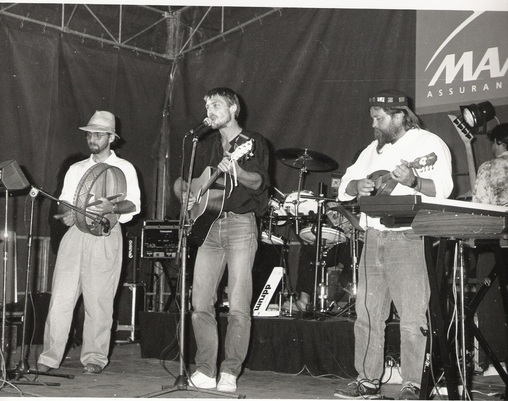
- I can play the bodhran, the Irish drum and did so in barn dance and demonstration dance group bands, as well as a summer in France, when our ad hoc group reached the finals of the “Truffe de Perigeux”.
- I started as a teacher with an environmental science background, did a post grad certificate to deepen my understanding then a few years later a post grad diploma in Language and Reading development.
- I played a wide range of sports; some to District and County Schools level.
- I enjoy painting and photography. I love being outdoors, exploring the natural world, gardening and doing conservation activities. I can coppice and pollard trees. I can identify a range of trees, flowers, insects and birds.
- I love DIY; there is a special feeling about seeing a project through to successful completion.
- My own life has had more than it’s fair share of trials and tribulations, so I can support pastorally.
- I know some stuff and can use this to help children to learn, by creating situations within which they can learn and I can teach, coach and support as needed.
There are side issues to the current description of mastery that worry me. An article headline that passed by on my Twitter timeline suggested that differentiation was dead, as mastery was the new buzz word. I’d argue that, as every learner is an individual, any teacher needs to know their learners well, in order to fine tune the necessary support and guidance that enables them to understand and to make progress, with any requisite practice en route.
When the learner, at any age, can see the journey, the point of practice and can enjoy the fruits of their labours, then they can begin to be autonomous learners.
And maybe that would be my preferred word, independent or autonomous, rather than mastery; the ability to use the known in practice, identifying the point where there is a need to know something else and to have the skills to address the shortfall in skill. These skills could be in collaborative endeavour, learning from another, book or internet research, or simply asking someone with the skill to teach it. Apart from anything else, these terms are gender neutral.
With, hopefully, more time available to hone some of the hobby skills and interests, I will, when work stops, take lessons, especially in painting and in music. I will learn from people who have spent a greater part of their lives honing a particular aspect of skill, whether watercolour, acrylics or oils, or possibly a mis-spent youth playing an instrument. I will, happily, become a learner again. There may be areas where any expertise that I have might be of use to another; that will be happily shared.
To my mind, mastery or misstery or mrstery, whatever the title, should not be applied in any form in a school learning environment, especially if it applies to a small group of children, without, yet, clear criteria.
If a child can confidently, competently and independently use and apply learned knowledge and skills in a range of novel situations, appropriate to their age, this can be acknowledged, but a “title” might just be the point where they stop making an effort, as they might think that they know it all. All should be challenged and enabled to aim high, accept the need for effort and to be prepared to learn from each other; they, and we, should acknowledge that we are all learners.
A master learner is not a know-all. They recognise their limitations and also the skills of others which are available to be learned.
The learner mantra should be “I can, but I could do this even better...”
The teacher mantra should be “ I know where you are and where you need to be challenged next…”




 RSS Feed